Can Foreigners Get a Mortgage in Tenerife?
 Carlos Quintero
Can Foreigners Get a Mortgage in Tenerife?
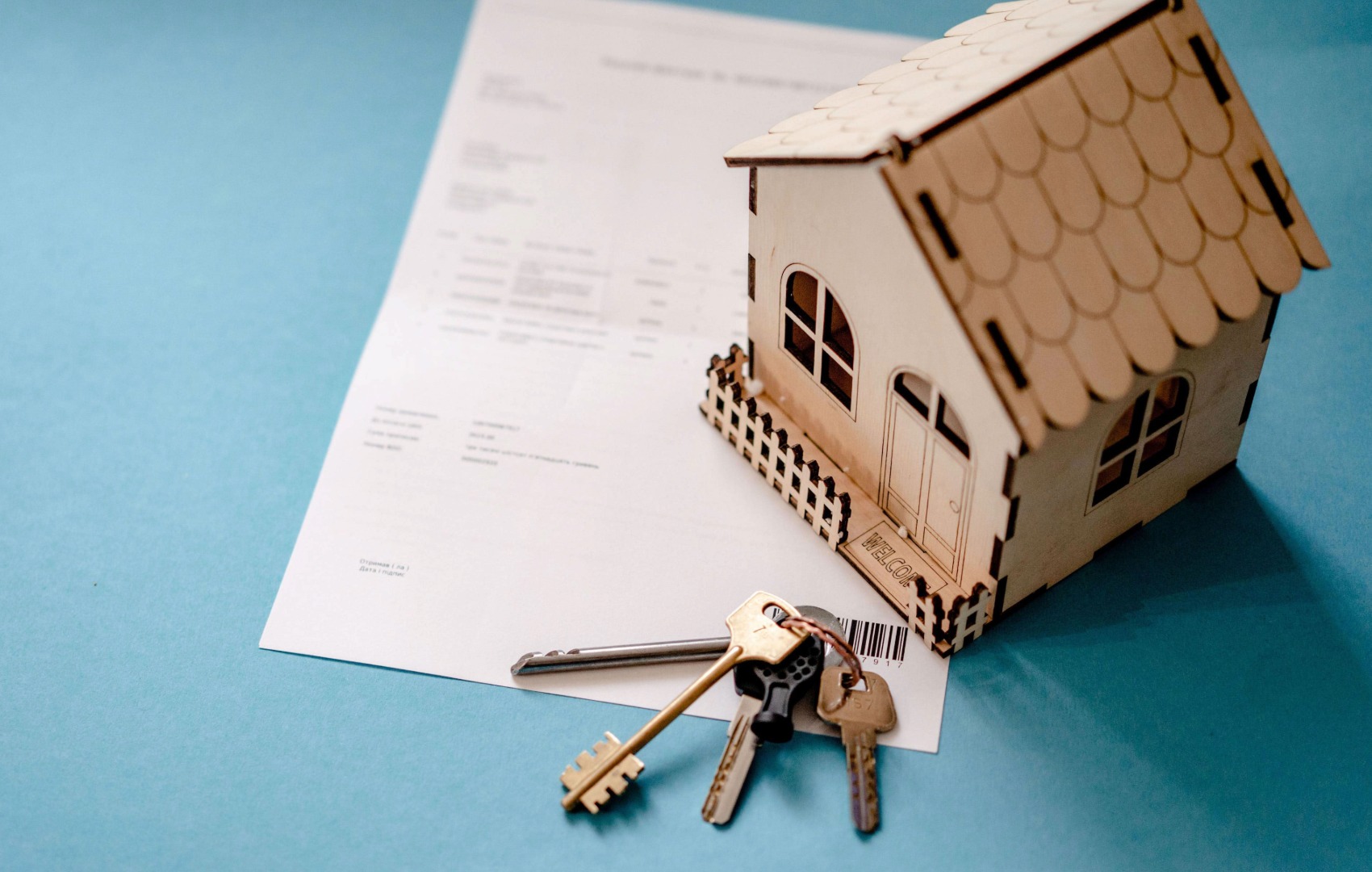
Buying a property in Tenerife is an attractive prospect for international buyers, whether they are looking for a holiday home, a permanent residence or a long-term investment.
However, one of the first questions many buyers ask is: Can foreigners get a mortgage in Tenerife?
The answer is yes. Spanish banks can provide mortgages to foreign buyers, including people who do not live in Spain.
You do not necessarily need Spanish citizenship, permanent residency or a Spanish employment contract to apply for financing.
However, mortgage conditions can vary significantly depending on whether you are a Spanish tax resident or a non-resident, where you earn your income, your financial circumstances and the property you intend to purchase.
Understanding these differences before beginning your property search can help you establish a realistic budget, avoid delays and make more informed decisions.
Can Non-Residents Get a Mortgage in Tenerife?
Yes. Many Spanish banks offer mortgages to non-resident buyers purchasing property in Tenerife.
A non-resident mortgage is generally intended for someone whose habitual residence and financial circumstances are primarily outside Spain.
For example, a buyer living and working in Germany, the Netherlands, Belgium or the United Kingdom may be able to obtain financing from a Spanish bank to purchase a second home in Tenerife.
Banks typically assess your income and employment stability, existing loans, financial commitments, savings, available deposit, country of residence, income currency, credit history and the property's valuation and legal status.
Being a foreign national does not automatically make you ineligible.
The bank's main concern is whether you can comfortably repay the mortgage and whether the property provides acceptable security for the loan.
How Much Can Foreigners Borrow in Tenerife?
One of the most important differences between resident and non-resident mortgages is the percentage of the property's value that a bank may be willing to finance.
For buyers purchasing their main residence in Spain, some banks may offer financing of up to approximately 80%, subject to eligibility and the lender's conditions.
For non-residents, financing is often more conservative.
Many lenders commonly consider loans covering approximately 60% to 70% of the property's eligible value, although the actual percentage depends on the applicant and the bank.
This means non-resident buyers should generally expect to contribute a larger deposit.
For example, consider a property with a purchase price of €350,000.
If the bank agrees to finance 70%, the mortgage would be €245,000, leaving the buyer responsible for a €105,000 deposit.
If the bank finances only 60%, the mortgage would be €210,000, meaning the buyer would need to contribute €140,000.
These figures exclude purchase taxes, legal fees and other acquisition costs.
The amount a bank agrees to lend is not necessarily calculated solely from the agreed purchase price.
Spanish lenders typically commission an independent property valuation, known as a tasación.
If the valuation is lower than the purchase price, the maximum available financing may also be lower than expected.
This is why obtaining an initial mortgage assessment before making a significant financial commitment can be particularly valuable.
How Much Deposit Do You Need for a Mortgage in Tenerife?
For non-resident buyers, a practical starting point is to prepare approximately 30% to 40% of the purchase price as a deposit, assuming the lender finances between 60% and 70%.
However, the deposit is not the only amount you will need.
Buyers must also account for taxes and transaction-related expenses.
For a resale property in Tenerife, the general Canary Islands Property Transfer Tax (Impuesto sobre Transmisiones Patrimoniales, or ITP) is 6.5%, although reduced rates may apply in specific circumstances.
Other costs can include notary fees, Land Registry fees, legal representation and the valuation required for the mortgage.
New-build properties follow a different indirect tax structure.
As a result, a non-resident purchasing a €350,000 property with 70% mortgage financing should not assume that having €105,000 available will be sufficient to complete the transaction.
The buyer also needs funds for acquisition costs and any additional requirements imposed by the lender.
For a more detailed explanation, read our guide to How Much Money Do You Need to Buy a Property in Tenerife?
What Documents Do Foreigners Need to Apply for a Mortgage?
Spanish banks require sufficient documentation to verify your identity, income, savings and existing financial commitments.
The exact requirements vary between lenders, but international buyers should generally prepare the following:
- Passport or national identity document: To verify your identity.
- NIE number: Your Spanish foreigner identification number, required for relevant tax and property transactions.
- Proof of income: Recent payslips, employment contracts or evidence of regular earnings.
- Tax returns: Often covering the previous one or two financial years.
- Bank statements: Showing income, savings and regular financial commitments.
- Credit information: Depending on your country of residence and the lender's requirements.
- Details of existing debts: Including mortgages, personal loans and other financial obligations.
- Proof of deposit: Documents demonstrating the origin and availability of your funds.
Self-employed applicants and business owners may need to provide additional documentation, including company accounts, business tax returns and evidence of stable earnings.
Some documents may need certified translations into Spanish.
It is advisable to prepare these documents before identifying a property, particularly when purchasing from abroad.
Can You Get a Spanish Mortgage with Foreign Income?
Yes. Earning your salary outside Spain does not automatically prevent you from obtaining a Spanish mortgage.
Many international buyers purchase properties in Tenerife while continuing to work in their home countries.
However, banks will assess the reliability of your income and may apply different lending criteria depending on where you live and the currency in which you are paid.
For example, a buyer earning a stable salary in euros may present a different risk profile from someone whose income is received in a currency that fluctuates significantly against the euro.
Some lenders may apply additional requirements to borrowers whose income or residence falls outside the eurozone.
This is particularly relevant for British buyers receiving income in pounds sterling.
If your income is in a different currency from your mortgage, exchange-rate movements can affect the effective cost of your repayments.
A mortgage that appears affordable today may become more expensive in your home currency if exchange rates move unfavourably.
How Much Income Do You Need to Qualify?
There is no single minimum salary that guarantees mortgage approval in Tenerife.
Banks evaluate affordability by considering your income alongside your existing financial obligations.
As a general planning guideline, many lenders prefer total monthly debt repayments to remain around 30%–35% of net monthly income, although individual lending policies differ.
Consider an international buyer earning €4,500 net per month.
If the lender uses a 35% debt-to-income threshold, total monthly debt repayments would ideally remain within approximately €1,575.
However, this does not mean the buyer automatically qualifies for a mortgage payment of that amount.
If they already pay €400 per month towards another loan, that commitment reduces the amount potentially available for a new mortgage.
The bank will also consider household expenses, dependants, financial reserves and employment stability.
Spanish mortgage regulations require lenders to assess borrowers' repayment capacity rather than relying primarily on the value of the property used as security.
Fixed-Rate vs Variable-Rate Mortgages in Spain
Foreign buyers can encounter different mortgage structures when applying for financing in Tenerife.
The most common are fixed-rate, variable-rate and mixed-rate mortgages.
Fixed-Rate Mortgages
A fixed-rate mortgage maintains the same contractual interest rate throughout the agreed fixed-rate period, which may cover the entire mortgage term.
This provides predictable monthly repayments.
For buyers purchasing a second home in Tenerife while maintaining financial commitments abroad, predictable payments can make budgeting easier.
However, fixed-rate mortgages are not automatically the cheapest option.
Their attractiveness depends on the interest rate offered, the loan term and the borrower's circumstances.
Variable-Rate Mortgages
Variable-rate mortgages generally calculate interest using a reference index, commonly Euribor, plus an agreed margin.
The interest rate is reviewed periodically according to the mortgage contract.
If the reference rate increases, repayments can rise. If it decreases, repayments may fall.
This introduces uncertainty that buyers should consider when calculating long-term affordability.
Mixed-Rate Mortgages
A mixed-rate mortgage combines an initial fixed-rate period with a subsequent variable-rate period.
This can offer predictable repayments during the first years while exposing the borrower to interest-rate changes later.
When comparing mortgage offers, buyers should look beyond the advertised interest rate and examine the Annual Percentage Rate (APR), known in Spain as TAE, together with fees, insurance requirements and other associated costs.
How Long Does a Mortgage Take in Tenerife?
Mortgage approval is not instantaneous.
The process normally involves an initial affordability assessment, document verification, property valuation, final underwriting and formalisation before a notary.
For a straightforward application with complete documentation, the process may take several weeks.
Applications involving foreign income, self-employment, unusual property characteristics or additional verification can take longer.
Buyers should therefore avoid assuming that mortgage approval will be completed within a fixed number of days.
Once a qualifying mortgage offer has been approved, Spanish law requires the lender to provide key pre-contractual documentation, including the Ficha Europea de Información Normalizada (FEIN), at least ten calendar days before signing.
The borrower must also receive the required notarial advice before completing the mortgage.
For international buyers, these formalities should be incorporated into the purchase timetable.
Can You Apply for a Mortgage Before Finding a Property?
Yes, and doing so is often advisable.
Although final mortgage approval normally depends on the specific property and its valuation, buyers can request an initial affordability assessment before starting their search.
This can help establish an approximate borrowing capacity, the deposit likely to be required, the type of mortgage available, potential monthly repayments and the documents the lender will request.
An initial assessment is not the same as a binding mortgage offer.
Nevertheless, it can prevent buyers from spending time viewing properties that fall outside their realistic budget.
For buyers travelling to Tenerife specifically to view properties, this preparation can make the process considerably more efficient.
Can You Buy Property in Tenerife with a Mortgage While Living Abroad?
Yes.
Many international buyers purchase property in Tenerife without relocating to Spain.
The property may be intended as a holiday residence, a future retirement home or an investment.
You can begin mortgage enquiries from abroad, provide documents electronically where accepted and coordinate much of the purchase process remotely.
However, some stages may require additional identity verification, signed documentation or representation through a legally valid power of attorney.
The practical arrangements depend on the lender, notary and circumstances of the transaction.
Buyers planning to complete remotely should establish these requirements early rather than waiting until the mortgage is ready to sign.
What Happens If the Bank Values the Property Below the Purchase Price?
This is an important risk that international buyers sometimes overlook.
Suppose you agree to purchase a property in Costa Adeje for €400,000.
You expect the bank to finance 70%, giving you a mortgage of €280,000.
However, the bank's valuation is only €370,000.
If the lender calculates its maximum loan as 70% of that valuation, the available financing would be €259,000.
That creates an additional €21,000 funding requirement compared with your original expectations.
The bank may also approve a lower amount because of your personal financial circumstances.
Mortgage lending decisions depend on both the valuation and the borrower's repayment capacity. The valuation must be carried out by an approved valuer, and a valid valuation can generally be used with another lender within its six-month validity period.
For this reason, mortgage-dependent buyers should seek legal advice about appropriate financing conditions before signing a reservation agreement or an arras contract.
What Mortgage Costs Should You Expect?
It is important to distinguish between property purchase costs and mortgage formalisation costs.
Under the general framework established by Spain's Law 5/2019, the borrower normally pays the property valuation, while the lender bears the notary, registration, management and applicable tax costs associated with formalising the mortgage loan.
The borrower may also pay an arrangement fee if one is validly included in the offer, along with the cost of optional or required products where legally applicable.
These rules do not eliminate the taxes and expenses associated with purchasing the property itself.
Buyers should therefore request a complete breakdown of both categories before committing to a purchase.
Common Mortgage Mistakes Foreign Buyers Should Avoid
One of the most common mistakes is beginning a property search without understanding the financing available.
Another is assuming that mortgage conditions in Spain will be identical to those offered in the buyer's home country.
A foreign buyer accustomed to high loan-to-value financing may discover that Spanish lenders require a significantly larger personal contribution.
Other common problems include underestimating acquisition costs, failing to prepare foreign income documentation, overlooking currency risk and signing purchase contracts without adequately addressing mortgage approval.
It is also important to avoid comparing mortgage offers based exclusively on the headline interest rate.
The total cost of borrowing, flexibility, early repayment conditions and associated products all deserve attention.
Is It Better to Buy with a Mortgage or Pay Cash?
This depends on the buyer's financial position and investment objectives.
Purchasing with cash can simplify the transaction and remove mortgage interest costs.
It may also allow a faster completion, provided the property's legal documentation is in order.
However, some buyers prefer financing because it allows them to retain liquidity for other investments, business activities or personal needs.
For international buyers purchasing a second home, the decision may depend on how frequently they plan to use the property and whether they prefer to keep capital available elsewhere.
Neither approach is automatically superior.
The important consideration is whether the financing structure remains comfortable over the long term.
Final Thoughts: Getting a Mortgage in Tenerife as a Foreigner
Foreigners can obtain mortgages in Tenerife, including buyers who are not Spanish residents.
The main challenge is not nationality but meeting the lender's affordability, documentation and property requirements.
Non-resident buyers should generally be prepared for a larger deposit, detailed checks on foreign income and a mortgage process that may require additional coordination.
Before beginning your property search, it is worth establishing how much you can borrow, how much capital you need and what your total purchase budget will be.
With the right preparation, buying property in Tenerife with a Spanish mortgage can be a realistic option for many international buyers.
Find Your Property in Tenerife with Luxury World Properties
Whether you are looking for an apartment in Los Cristianos, a holiday home in Costa Adeje or a villa in the south of Tenerife, choosing the right property begins with understanding your budget and priorities.
Luxury World Properties helps international buyers discover properties across Tenerife, compare locations and navigate the purchasing process with the support of a multilingual team.
If you are considering purchasing a property in Tenerife with mortgage financing, contact us to discuss your requirements and explore properties suited to your budget.
Discover our available properties at https://www.luxurywp.com/.
Artículos recientes

6 de octubre de 2026 06/10/2026
¿Qué es la RIC en Canarias y cómo funciona? Guía 2026
¿Qué es la RIC en Canarias y cómo funciona? Guía …

1 de septiembre de 2026 01/09/2026
Exclusive vs Multiple Estate Agents in Tenerife: Which Is Better?
Exclusive vs Multiple Estate Agents: What’s Bette…

1 de septiembre de 2026 01/09/2026
Can You Sell a Property in Tenerife with a Mortgage?
Can You Sell a Property in Tenerife with a Mortga…

1 de septiembre de 2026 01/09/2026
Why Isn’t My Property Selling in Tenerife?
Why Isn’t My Property Selling in Tenerife? Your p…

1 de septiembre de 2026 01/09/2026
How Long Does It Take to Sell a Property in Tenerife?
How Long Does It Take to Sell a Property in Tener…