How Much Money Do You Need to Buy a Property in Tenerife?
 Carlos Quintero
How Much Money Do You Need to Buy a Property in Tenerife?
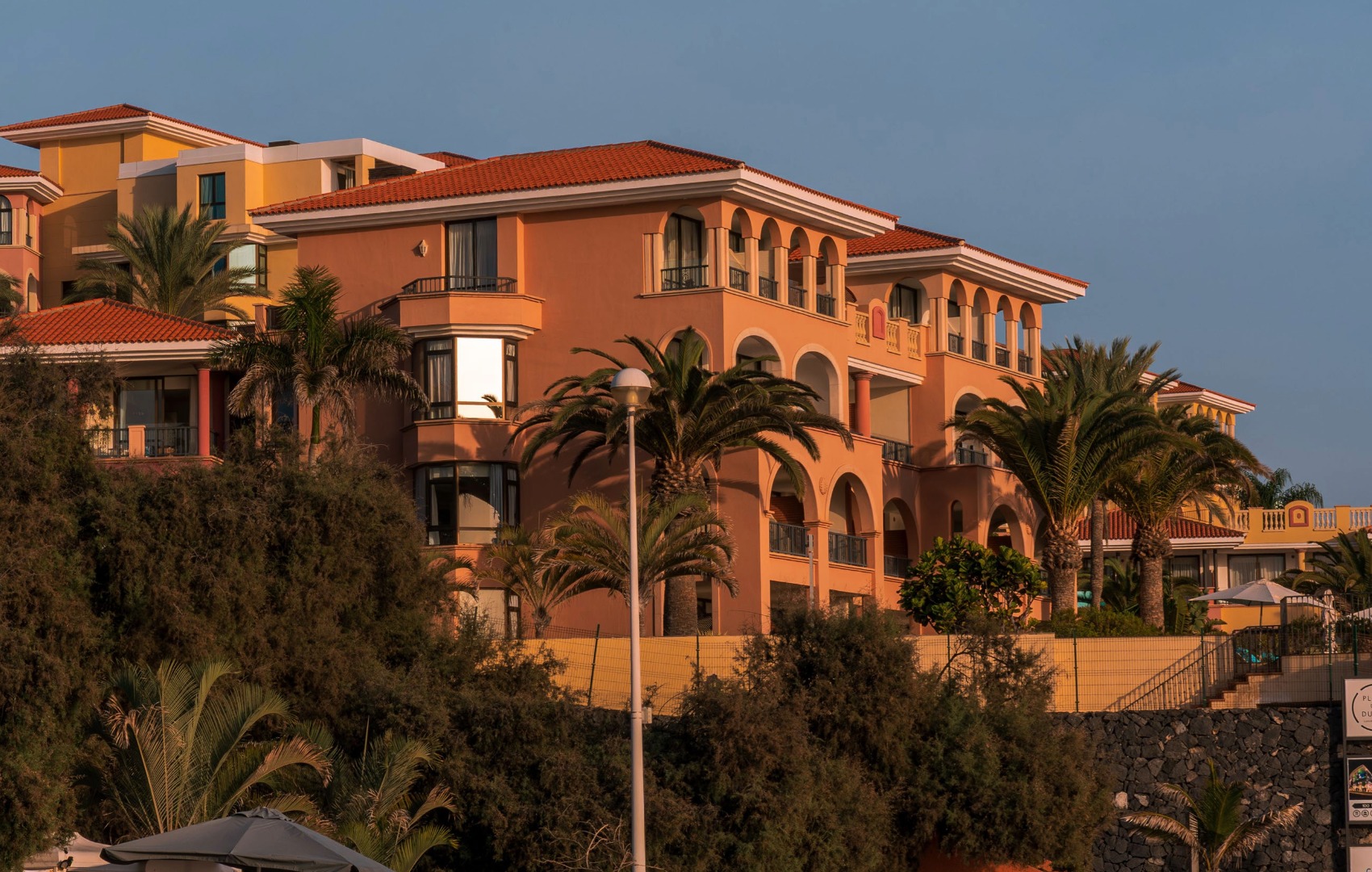
One of the first questions international buyers ask when considering a property in Tenerife is simple: how much money do I actually need?
The answer involves more than the advertised price of the property.
When buying a home in Tenerife, you also need to budget for purchase taxes, legal and administrative expenses, registration costs and, depending on the transaction, mortgage-related costs. If you're financing the purchase, you'll also need sufficient funds to cover the part of the property price that the bank doesn't finance.
Understanding these costs before starting your property search can help you establish a realistic budget and avoid unexpected expenses later in the process.
This guide explains the main costs you should consider when buying property in Tenerife in 2026.
Start With Your Total Budget, Not the Property Price
If you have €400,000 available, that doesn't necessarily mean you should search for properties priced at €400,000.
Part of your available capital will need to be reserved for the costs associated with completing the purchase.
The exact amount depends on several factors, particularly:
- Whether the property is resale or new build
- The applicable taxes
- Whether you're buying with cash or a mortgage
- Legal and administrative costs
- The property's taxable value
- Your individual circumstances
For this reason, it's better to calculate your maximum acquisition budget first and then determine how much of that amount can be allocated to the property itself.
Resale vs New Build: Why It Makes a Difference
One of the biggest factors affecting your purchase costs in Tenerife is whether you're buying a resale property or purchasing a new property directly from a developer.
The two types of transaction are taxed differently.
Buying a Resale Property in Tenerife
Resale properties are generally subject to ITP — Impuesto sobre Transmisiones Patrimoniales, or Property Transfer Tax.
In the Canary Islands, the general ITP rate applicable to transfers of real estate is currently 6.5%, although reduced rates may apply in certain circumstances. The applicable treatment should always be confirmed for the individual transaction.
So, if the relevant taxable base of a resale property were €300,000 and the general 6.5% rate applied, the ITP would be:
€19,500
For a taxable base of €500,000:
€32,500
And for €1,000,000:
€65,000
These examples are illustrative and assume the general rate applies.
Don't Forget the Valor de Referencia
There's another important point when calculating ITP: the Valor de Referencia del Catastro.
For properties with an official reference value, ITP isn't necessarily calculated simply on the amount you've negotiated with the seller.
If the property's Valor de Referencia is higher than the purchase consideration or declared value, the reference value can determine the taxable base. If the declared value or consideration is higher, the higher figure is used.
Imagine you negotiate a resale property for €350,000 but its applicable Valor de Referencia is €380,000.
You shouldn't automatically calculate your ITP budget using €350,000.
This is why checking the property's reference value before completing the purchase can be important when establishing your true acquisition costs.
What About New-Build Property?
Purchasing a new-build property directly from a developer follows a different tax structure.
Instead of the ITP applicable to a typical resale transaction, new-build purchases in the Canary Islands are generally subject to IGIC — Impuesto General Indirecto Canario.
IGIC is the Canary Islands' indirect tax and operates separately from mainland Spain's VAT system.
New-build transactions may also involve AJD — Actos Jurídicos Documentados, depending on the transaction and applicable legislation.
This distinction is important when comparing a resale property with a new development. Two properties with identical asking prices won't necessarily have identical acquisition costs.
Notary Costs
The purchase of a property in Spain is normally formalised through a public deed of sale, the Escritura Pública de Compraventa, signed before a notary.
Notarial fees are regulated and depend on the characteristics and value of the transaction, among other factors.
Rather than assuming a fixed percentage, buyers should obtain an estimate for their specific purchase.
The notary is an impartial public official. Their involvement in the transaction shouldn't be confused with having an independent lawyer representing your interests.
Land Registry Costs
After completion and payment of the relevant taxes, the purchase deed is normally submitted to the Registro de la Propiedad, or Land Registry.
Registration provides important legal protection by formally recording your ownership.
Land Registry fees are also regulated and depend on the transaction rather than being a universal fixed amount.
They should therefore be included in your acquisition budget alongside the notary and legal costs.
Legal Fees
International buyers commonly appoint an independent Spanish lawyer to handle the legal side of the transaction.
Your lawyer may assist with matters such as reviewing contracts, checking ownership and registered charges, examining relevant property documentation, coordinating with the notary and dealing with tax and post-completion formalities.
Legal fees vary according to the professional, transaction and services required.
Ask for a clear fee proposal before proceeding so that this expense can be incorporated into your budget from the beginning.
How Much Deposit Will You Need?
The word deposit can refer to several different payments during a Spanish property purchase.
A reservation payment may be made when taking a property off the market.
A larger amount may subsequently be paid when signing a private purchase or arras contract.
A commonly encountered structure involves a deposit equivalent to around 10% of the purchase price at the private-contract stage, but this isn't a universal statutory amount that applies automatically to every transaction.
The amount, timing and legal consequences depend on the contract you sign.
For that reason, don't assume that every Tenerife property purchase follows exactly the same payment schedule.
Is the Deposit an Extra Cost?
Usually, a contractual deposit forms part of the purchase price rather than being added on top of it.
For example, imagine you agree to purchase a property for €400,000 and €40,000 has already been paid towards the purchase price before completion.
Subject to the contractual arrangements, the remaining purchase-price balance would then be €360,000.
However, taxes and other acquisition costs would still need to be funded separately.
This distinction is important when calculating how much liquid capital you need at each stage.
Buying With a Mortgage
If you're using a Spanish mortgage, your calculation changes considerably.
A bank normally won't finance the entire acquisition.
The amount available depends on the lender, your residency status, income, existing financial commitments, the property valuation and your overall financial profile.
Non-resident buyers should be particularly careful about assuming a particular loan-to-value ratio before receiving an actual financing assessment.
Even if you're approved for a mortgage, you'll generally need your own capital for the portion of the purchase price that isn't financed.
And you also need to account for purchase costs.
Example: Buying a €300,000 Property
Suppose you're considering a resale property priced at €300,000.
If the taxable base is also €300,000 and the general Canary Islands ITP rate of 6.5% applies, ITP alone would represent approximately:
€19,500
You would then need to budget for other applicable transaction costs, such as legal assistance and relevant notarial and registration expenses.
If you're purchasing with cash, you therefore need more than €300,000 available to complete the entire acquisition.
If you're financing the property, you need sufficient capital for the part not covered by the mortgage plus the acquisition expenses that remain your responsibility.
Example: Buying a €500,000 Property
Now consider a resale property with a €500,000 taxable base.
At a 6.5% ITP rate, the transfer tax would be approximately:
€32,500
Again, this doesn't include all other transaction expenses.
A buyer who says, “My budget is €500,000,” therefore needs to clarify whether that means:
€500,000 for the property itself, with additional funds available for purchase costs;
or
€500,000 total, including the property and all associated expenses.
Those are two very different property-search budgets.
What About a €1 Million Property?
The same principle becomes even more significant at higher price points.
On a resale property with a taxable base of €1,000,000, a 6.5% ITP calculation would represent:
€65,000
before considering the other applicable transaction expenses.
For buyers looking at premium properties, villas or larger investments in Tenerife, establishing the total acquisition budget before negotiations becomes particularly important.
How Much Extra Should You Budget?
You'll often see generic advice online telling buyers to “add 10%” or “add 15%” to the purchase price.
This can be useful as a very rough planning concept, but it shouldn't replace an actual calculation.
Your real costs depend on the type of property, applicable tax regime, taxable base, financing arrangements and professional expenses.
A better approach is to calculate each major cost individually once you've identified a property.
That gives you a realistic completion figure rather than relying on a percentage designed to cover every type of Spanish property transaction.
Don't Spend Every Euro on Completion
Your financial planning shouldn't stop with the purchase.
Once you own the property, you'll begin paying the ongoing costs associated with it.
These can include:
IBI. The annual municipal property tax.
Community fees. Applicable to many apartments, townhouses and properties within residential communities.
Utilities. Electricity, water, internet and other services.
Home insurance. Particularly important for homeowners and potentially required under certain financing arrangements.
Maintenance. From routine repairs to air-conditioning, pools, gardens and terraces.
Property management. Relevant for some second-home owners who spend significant periods outside Tenerife.
It's sensible to retain a financial reserve after completion rather than committing virtually all available capital to the purchase itself.
How Much Cash Do You Need If You're a Non-Resident?
There isn't a single figure applicable to every non-resident buyer.
You need to consider three separate amounts:
First, your contribution towards the purchase price.
If you're buying with a mortgage, this is the portion the bank isn't financing.
Second, your acquisition costs.
These include applicable taxes and other transaction expenses.
Third, your post-purchase reserve.
You'll need funds for the initial and ongoing costs of owning the property.
The safest approach is therefore not to ask only, “What deposit do I need?” but instead:
“How much liquid capital will I need from the beginning of the transaction until after completion?”
That's the figure that matters.
What Other Costs Can Buyers Overlook?
There can also be expenses that aren't immediately obvious when browsing property listings.
For international buyers, these might include currency-conversion costs when transferring money into euros, bank-transfer charges, translation or interpreting where required and costs associated with granting a Power of Attorney if you're purchasing remotely.
If you're buying with financing, valuation or other mortgage-related expenses may also need to be considered depending on the transaction.
And if the property needs renovation, furniture or immediate maintenance, those expenses should form part of your wider budget even though they aren't technically purchase taxes.
Should You Open a Spanish Bank Account?
A Spanish bank account can make managing the purchase and subsequent ownership considerably easier.
It can be used for recurring expenses such as IBI, community fees, utilities, insurance and mortgage payments.
International buyers should also be prepared for anti-money-laundering and source-of-funds checks when moving substantial sums into Spain.
Organising the banking side of the transaction early can help prevent unnecessary delays later.
Can You Buy Property in Tenerife With Cash?
Yes.
If you don't require financing, a cash purchase removes the mortgage-approval stage from the transaction.
However, “cash buyer” doesn't mean turning up with physical cash. The funds still need to move through appropriate banking and payment channels, with the necessary documentation regarding their origin.
A cash buyer also still needs to account for taxes, legal due diligence, notary formalities, registration and other transaction costs.
Not needing a mortgage doesn't eliminate the rest of the buying process.
The Most Important Number Is Your Total Acquisition Budget
When searching for property in Tenerife, there are really two budgets.
The first is your property budget: how much you're prepared to pay the seller.
The second is your total acquisition budget: how much capital you're prepared to commit to the entire transaction.
The second figure is the one that should determine your search.
If your total available budget is fixed, calculate the likely acquisition costs first and work backwards to determine an appropriate maximum purchase price.
That allows you to search confidently without finding the perfect property only to discover that completing the transaction would push you beyond your financial limit.
Final Thoughts
So, how much money do you need to buy a property in Tenerife?
The answer is more than the advertised purchase price.
You need to account for the property itself, ITP or the applicable new-build taxation, legal and administrative expenses, notary and registration costs and, where relevant, your mortgage contribution and financing-related expenses.
You should also leave sufficient capital available for the costs of ownership after completion.
The exact figure depends on the property and the buyer, which is why acquisition costs should be calculated for the individual transaction rather than relying entirely on generic percentages found online.
Establishing this budget before you start viewing properties makes the entire buying process more efficient and considerably reduces the possibility of financial surprises later.
Planning to Buy Property in Tenerife?
Luxury World Properties helps international buyers understand the Tenerife property market and identify homes that fit both their requirements and their overall budget.
Our multilingual team can assist with your property search and coordinate the purchasing process with the relevant independent legal and financial professionals.
Explore our properties for sale in Tenerife or contact Luxury World Properties to start your property search.
Artículos recientes
28 de octubre de 2026 28/10/2026
Moving to Tenerife from Poland: Complete Guide
Moving to Tenerife from Poland: Property, Residen…

28 de octubre de 2026 28/10/2026
Moving to Tenerife from the Netherlands: Complete Guide
Moving to Tenerife from the Netherlands: Property…

28 de octubre de 2026 28/10/2026
Moving to Tenerife from Germany: Complete Guide
Moving to Tenerife from Germany: Property, Reside…

28 de octubre de 2026 28/10/2026
Best Places to Retire in Tenerife
Best Places to Retire in Tenerife: Where to Buy Y…

28 de octubre de 2026 28/10/2026
Buying a Second Home in Tenerife as a Foreigner
Buying a Second Home in Tenerife: Complete Guide …